

Understanding Pedal Types: From Overdrive to Reverb — What Every Guitarist Needs
Whether you’re a beginner or a seasoned guitarist, understanding the different types of guitar pedals is essential for building a versatile pedalboard and crafting your signature tone. In this guide, we’ll break down the most popular effects — from classic overdrive to spacious reverbs — and show you which ones every guitarist should consider.
Section 1 — Overdrive & Distortion: The Heart of Rock
- Overdrive: emulates the natural saturation of a tube amp. Perfect for blues, classic rock and country.
- Distortion: heavier compression and aggression, widely used in hard rock and metal.
- Popular examples: Tube Screamer, Boss DS-1, Caline Queen Bee.
👉 Keywords: overdrive pedal, distortion pedal, transparent overdrive.
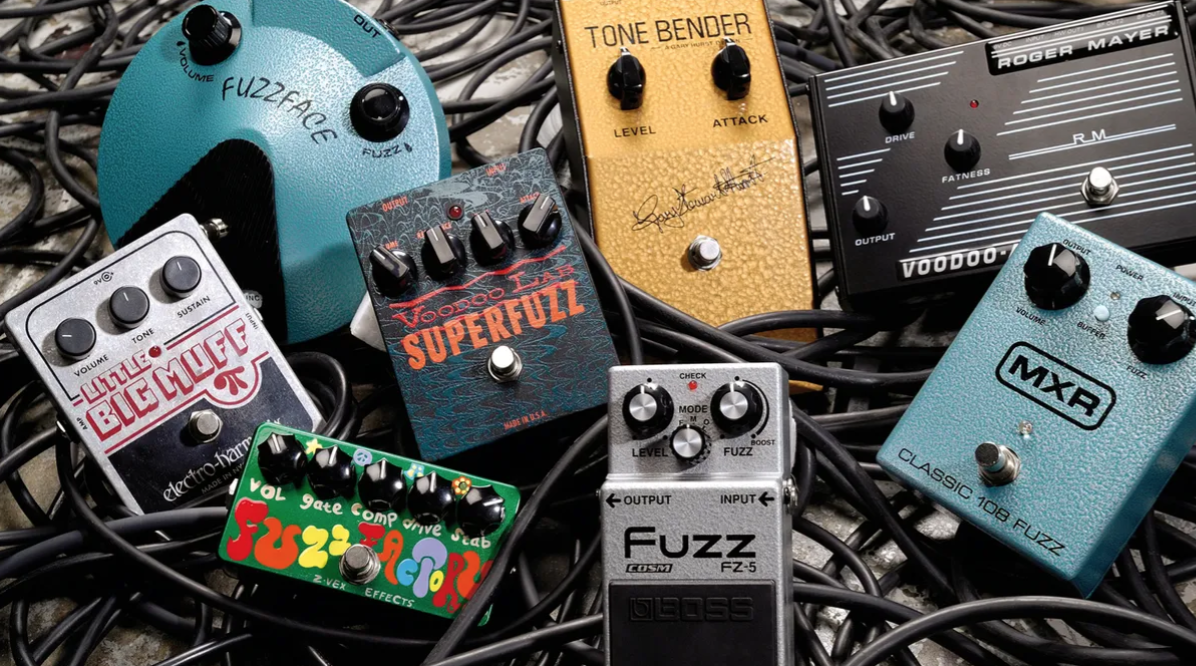
Section 2 — Fuzz: Vintage Sustain
- Iconic in the late 60s and 70s, producing gritty, compressed tones full of character.
- Used by legends like Hendrix, Smashing Pumpkins and Queens of the Stone Age.
👉 Keywords: fuzz pedal, vintage fuzz, guitar sustain.
Section 3 — Delay: Echo and Dimension
- Creates repetitions of your original signal.
- Great for solos, psychedelic effects and building ambient textures.
- Types: analog (warm and organic), digital (precise), tape echo (retro vibe).
👉 Keywords: delay pedal, analog delay, digital delay.
Section 4 — Reverb: Adding Space
- Simulates acoustic environments: small rooms, large halls, or spring tanks.
- Essential for ambient tones, worship music, and adding depth to any mix.
- Example: Demonfx Ghast Echo Reverb.
👉 Keywords: reverb pedal, ambient reverb, spring reverb.
Section 5 — Modulation: Color and Movement
- Chorus: doubles and blends signals for a richer sound.
- Phaser/Flanger: sweeping, swirling textures.
- Tremolo/Vibrato: rhythmic variations in volume or pitch.
👉 Keywords: modulation pedals, chorus pedal, phaser pedal.
Section 6 — Essential Pedals for Any Setup
Every pedalboard should include at least:
- An Overdrive/Distortion (core drive tone)
- Delay or Reverb (space and ambience)
- One Modulation pedal (color and movement)
- A Tuner (non-negotiable!)
👉 These are the true bread & butter pedals every guitarist relies on.
Conclusion
Understanding pedal types makes it easier to choose what fits your playing style and goals. Whether you’re into blues, metal, classic rock or ambient soundscapes, the right combination of pedals will define your voice as a guitarist.
👉 Explore the full collection of pedals at Stompbox Store and start building your dream pedalboard today.