

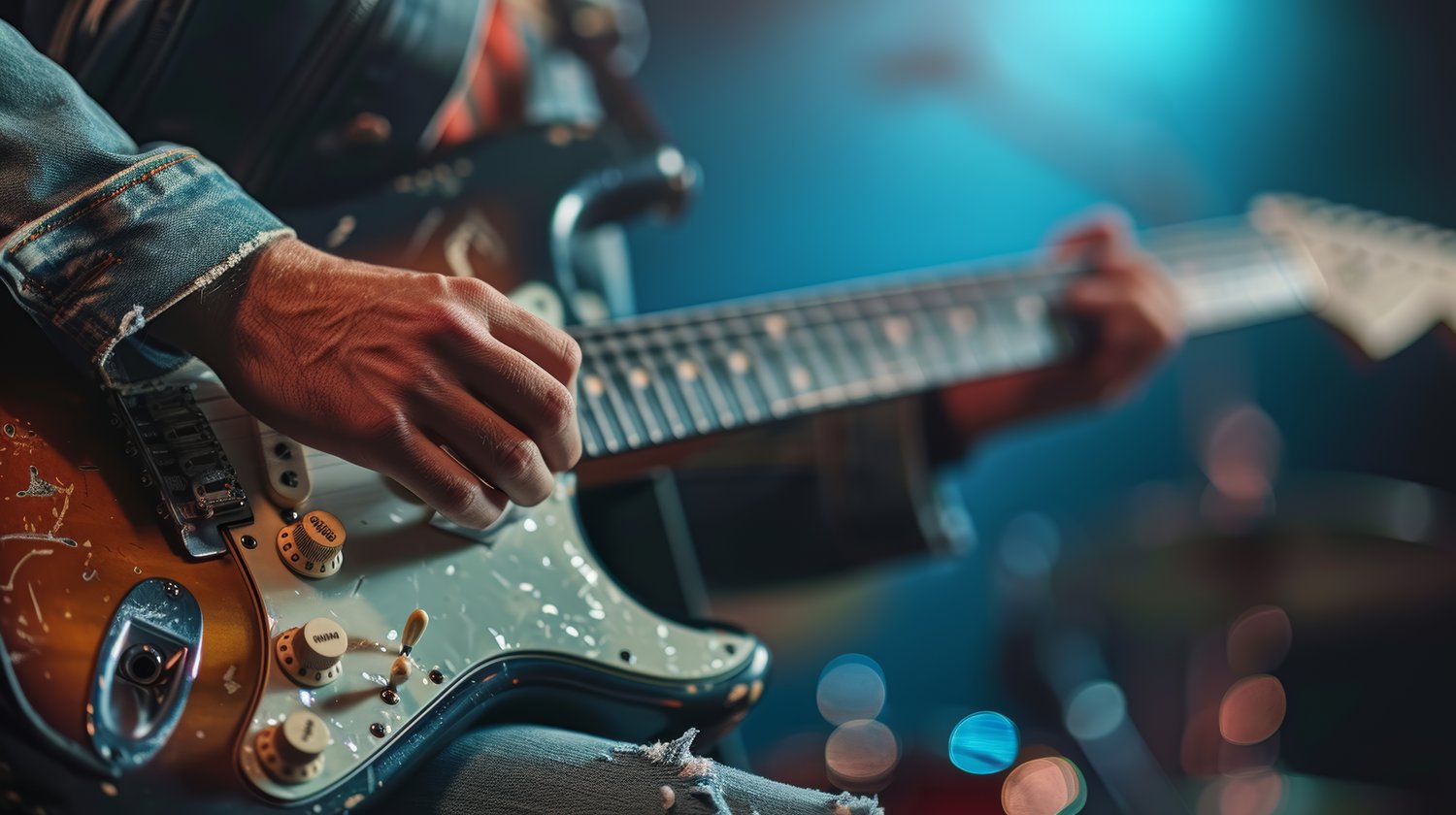
Discover essential guitar techniques using pedals, from overdrive to reverb. Learn how to create expressive tones, layer effects, and enhance your guitar playing with stompboxes.
Introduction
Pedals, also known as stompboxes, are essential tools for guitarists looking to expand their tonal palette and creative expression. From subtle overdrive to lush ambient effects, understanding how to use pedals effectively can dramatically improve your sound for both live performances and studio recordings. In this guide, we’ll cover key guitar techniques, pedal types, and tips to master your tone.
Overdrive & Distortion: Adding Grit and Dynamics
Purpose: Adds sustain, harmonic content, and warmth to your guitar tone.
Techniques:
- Touch sensitivity: Play softly for clean tones, harder for natural overdrive.
- Stacking pedals: Combine mild overdrive with heavier distortion for complex sounds.
- Amp interaction: Use pedals to push your amp tubes for organic saturation.
Recommended Pedals: Caline Pure Sky Overdrive CP-12, Boss DS-1, Ibanez Tube Screamer
Pro Tip: Adjust your guitar volume knob for dynamic variation without touching the pedal.
Delay: Create Space and Rhythmic Textures
Purpose: Adds echoes and repeats, thickening riffs or solos.
Techniques:
- Sync delay to the song’s tempo for rhythmic effects.
- Use subtle feedback to create background textures.
- Tap tempo for live performance loops.
Recommended Pedals: Boss DD-8, TC Electronic Flashback, Analog Tape Delays
Pro Tip: Stereo delays can make solos sound wider and more immersive.
Reverb: Atmosphere and Depth
Purpose: Adds ambiance and space to your tone.
Techniques:
- Spring reverb for vintage clean tones.
- Hall or plate reverb for solos and atmospheric sounds.
- Layer reverb with delay for dreamy textures.
Recommended Pedals: Demonfx Ghast Echo Reverb, Strymon BigSky, Electro-Harmonix Holy Grail
Pro Tip: Avoid overusing reverb in fast passages to prevent a muddy sound.
Modulation: Add Movement and Texture
Purpose: Adds motion and richness to chords and solos.
Techniques:
- Chorus for lush clean chords.
- Flanger for sweeping, psychedelic textures.
- Phaser for subtle or dramatic movement.
Recommended Pedals: MXR Phase 90, Boss CE-2, TC Electronic Corona Chorus
Pro Tip: Modulation pedals generally sound best after overdrive/distortion.
Wah & Envelope Filters: Expressive Frequency Control
Purpose: Shape your tone dynamically using your foot.
Techniques:
- Wah rocking for expressive solos and funk rhythms.
- Envelope filter reacts automatically to your playing dynamics.
Recommended Pedals: Dunlop Cry Baby, Electro-Harmonix Q-Tron
Pro Tip: Combine wah with light overdrive for expressive lead lines.
Loopers: Layering and Creativity
Purpose: Record and layer riffs, chords, and solos for practice or performance.
Techniques:
- Start with rhythm, then layer melody and harmony lines.
- Experiment with reverse loops, half-speed, and stutter effects.
Recommended Pedals: Boss RC series, TC Electronic Ditto
Pro Tip: Practice with a metronome for precise timing.
Pedal Chain Order: Shape Your Sound
- Classic chain: Tuner → Overdrive → Modulation → Delay → Reverb
- Experiment: Swapping modulation and delay can create unique textures.
Key Insight: The order of pedals dramatically affects your tone; small adjustments can unlock unique sounds.
Advanced Tips
- Volume Swells: Use a volume pedal to mimic violin-like swells.
- Dynamic Playing: Adjust picking strength and gain to interact with your pedals.
- Signal Splitting: ABY boxes or multi-effects loops allow parallel processing.
- Pedal Interaction: Some pedals respond differently when stacked; experimentation is key.
Conclusion
Mastering guitar pedals is both a technical and artistic journey. By understanding each pedal type, experimenting with chain order, and exploring dynamic playing techniques, you can unlock unlimited tonal possibilities. Whether you're a beginner or an experienced guitarist, pedals are essential tools to enhance your sound, creativity, and musical expression.